Engineering the Depths: Why M12 and M16 IP68 Connectors are Critical for Underwater Robot Reliability

As the marine industry pushes the boundaries of exploration, Autonomous Underwater Vehicles (AUVs) and Remotely Operated Vehicles (ROVs) have become indispensable tools for深海勘探, pipeline inspection, and underwater maintenance -1. However, the harsh reality of the ocean environment—corrosive saltwater, extreme pressure, and dynamic mechanical stress—demands electronics that can withstand relentless punishment.
At the heart of every reliable underwater robot lies a robust interconnection system. While many components contribute to a vehicle’s functionality, the M12 and M16 IP68 waterproof connectors are often the unsung heroes, ensuring that power and critical data flow seamlessly between the tether, thrusters, sensors, and control systems.
In this article, we dive deep into the technical advantages of M12 and M16 connectors and explore why they are the preferred choice for modern underwater robotics.
The Challenge: Connectivity in the Abyss
Underwater robots present a unique set of engineering challenges. They must operate in high-humidity environments, often at significant depths, while carrying high-current loads for thrusters and transmitting sensitive data from sonar and cameras. Traditional industrial connectors simply cannot cope with the combination of hydrolysis, chemical corrosion (from chlorine or salt), and dynamic vibration -3-6.
For an AUV or ROV, a single point of failure—such as a short circuit caused by water ingress or a signal interruption due to vibration—can result in catastrophic mission failure or even total loss of the vehicle.
The Solution: M12 and M16 Series Connectors
The M series (M12 and M16) circular connectors have been engineered specifically to address these challenges. They bridge the gap between standard industrial I/O and true marine-grade reliability. Here is how they perform in the field:
1. Uncompromised Environmental Sealing (IP68)
The most critical feature for any underwater application is the Ingress Protection (IP) rating. M12 and M16 connectors designed for this sector achieve IP68 (and sometimes IP69K) certification -1-10.
-
IP68 Performance: These connectors are designed for permanent submersion. High-quality variants can withstand submersion in 1 to 2 meters of water for extended periods (often 24+ hours) without any performance degradation -6.
-
Sealing Mechanism: They typically utilize injection-molded, integral sealing combined with a screw-locking mechanism. This not only prevents water ingress but also ensures the connection remains tight even when subjected to hydrodynamic forces or tether pulls -4-7.
2. Robust Mechanical Design for Dynamic Motion
Underwater robots are constantly in motion, experiencing vibration, torque from thrusters, and repeated cable flexing.
-
Anti-Vibration Locking: The threaded coupling design (M12 x 1.5 or M16 x 1.5) ensures a secure mechanical lock that resists loosening under vibration, which is common in propeller-driven vehicles -7.
-
Strain Relief: High-quality assemblies feature reinforced cable sheaths (such as PUR) and multi-strand copper conductors that offer high bending cycles (>2 million cycles), resisting fatigue from continuous robotic arm movement or tether management -2-7.
3. Power and Signal Integrity
Modern underwater robots require more than just power; they require intelligence.
-
High Current Capacity: The M16 series, in particular, is suitable for power-hungry applications. While the M12 can handle up to 10A or more, larger M16 variants can manage higher current loads required for main propulsion motors, with robust conductor cross-sections (e.g., 1.14 mm²) to prevent overheating -6.
-
Multi-Pin Configurations: These connectors offer flexible pin counts (ranging from 4 to 17 pins), allowing engineers to combine power, motor control, and sensor signals into a single connection point. This simplifies the design and reduces the number of bulkhead penetrations required on the pressure vessel -1-7.
-
EMI Shielding: To prevent electromagnetic interference from affecting sensitive sonar or GPS data, many M12 and M16 connectors come with 360° shielding. The metal housing or internal copper alloy shielding protects signal integrity in the "noisy" electrical environment of a robot -1-4-7.
4. Corrosion Resistance
Saltwater is highly corrosive. Premium M12/M16 connectors utilize materials designed to withstand this:
-
Housing Materials: Options include nickel-plated brass or high-grade PA66 nylon (plastic), which resist corrosion, salt spray, and UV exposure -2-6.
-
Contact Plating: Contacts are typically gold-plated (over brass or copper alloy), ensuring extremely low contact resistance (≤10mΩ) and preventing oxidation that could lead to connection failure over time -6-7.
-
Key Applications in Underwater Robotics
The versatility of the M12 and M16 series makes them suitable for various sub-systems within a single underwater vehicle:
-
Charging Modules: For AUVs docked in underwater stations or for topside charging, these connectors provide a safe, waterproof interface for high-voltage or high-current charging without compromising the hull integrity -1-3.
-
Thruster Motors: The screw-locking mechanism ensures that vibration from the thrusters does not disconnect the power supply, while the IP rating prevents water from shorting the motor windings.
-
Sensor Arrays (Sonar, Cameras, LED Lights): The EMC shielding capabilities are crucial here, ensuring that high-frequency video signals or echo sounder data remains clean and reliable -6.
-
External Battery Packs: For vehicles that utilize swappable external battery pods, M16 connectors offer the robust mechanical coupling and high current ratings needed for quick-change operations -3-10.
Choosing the Right Connector: M12 vs. M16
When designing your underwater system, selecting the correct form factor is key:
| Feature | M12 Connector | M16 Connector |
|---|---|---|
| Typical Application | Sensors, cameras, communication tether, small thrusters | Main power, main thrusters, charging modules, battery packs |
| Current Rating | Up to 10A (Standard) / Up to 15A (Custom) | Typically higher than M12; suitable for power circuits |
| Size & Footprint | Compact, ideal for tight spaces on smaller ROVs | Larger diameter, requires more panel space but offers greater mechanical strength |
| Shielding | Excellent 360° shielding options | Excellent 360° shielding options |
| Durability | 500+ mating cycles | 500+ mating cycles |
Conclusion
The reliability of an underwater robot is only as strong as its weakest link. In the deep sea, there is no room for error. The M12 and M16 IP68 waterproof connectors offer a proven, standards-based solution that combines high environmental protection, superior mechanical strength, and signal integrity.
Whether you are designing a compact inspection ROV or a large-scale commercial AUV, integrating these connectors ensures that your power and data links remain stable, safe, and corrosion-free, allowing you to focus on the mission rather than maintenance.
Looking to optimize your underwater robotics design? Contact us today to explore our full range of M12 and M16 IP68 connector solutions, tailored for the toughest marine environments.
LP16 Type-C Waterproof Connector: The Ideal USB-C Solution for Harsh Industrial and Outdoor Environments
Navigating the Deep: How Cablein’s IP68 Underwater Connectors Solve ROV Assembly Challenges
Related Article
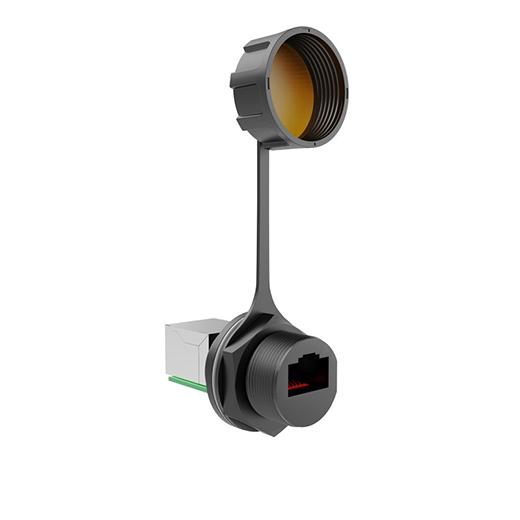

A trusted manufacturing partner provides not only high-quality IP67/IP68 waterproof connectors but also comprehensive engineering support, strict quality control, and flexible customization services to meet diverse application needs.