ENPHASE will produce micro -inverters in Romania
2023-03-11
American manufacturer ENPHASE said this week that it will produce miniature inverters in Timisoara, Romania since the first quarter of 2023. The company's factory will be located in Romanian production bases located in its partner Weizhong.
"This is the moment of changes in European and global clean energy," Especially For Solar Micro Inverter projects,said ENPHASE CEO Badri Kothandaraman. "Policy makers of various countries are setting up a new goal to help accelerate the transition to more electrified future. We expect to lead us through our leading leader. Solar, battery, and electric vehicle charging solutions help meet increasing demand. I want to thank Weichengli as such a strong partner in our global manufacturing strategy, support us to better serve our product quality while better serving our quality. client."
The initial production and planned capacity of the new factories have not been disclosed. The company did not disclose how much it would invest in this new production facility.
"We thank ENPHASE's trust in the cooperation with our nearly 15 years in the nearly 15 years of cooperation with our cooperation, and look forward to the advanced manufacturing level in the region in a sustainable way."
"This is the moment of changes in European and global clean energy," Especially For Solar Micro Inverter projects,said ENPHASE CEO Badri Kothandaraman. "Policy makers of various countries are setting up a new goal to help accelerate the transition to more electrified future. We expect to lead us through our leading leader. Solar, battery, and electric vehicle charging solutions help meet increasing demand. I want to thank Weichengli as such a strong partner in our global manufacturing strategy, support us to better serve our product quality while better serving our quality. client."
The initial production and planned capacity of the new factories have not been disclosed. The company did not disclose how much it would invest in this new production facility.
"We thank ENPHASE's trust in the cooperation with our nearly 15 years in the nearly 15 years of cooperation with our cooperation, and look forward to the advanced manufacturing level in the region in a sustainable way."
outdoor splitter plug, waterproof connector Description
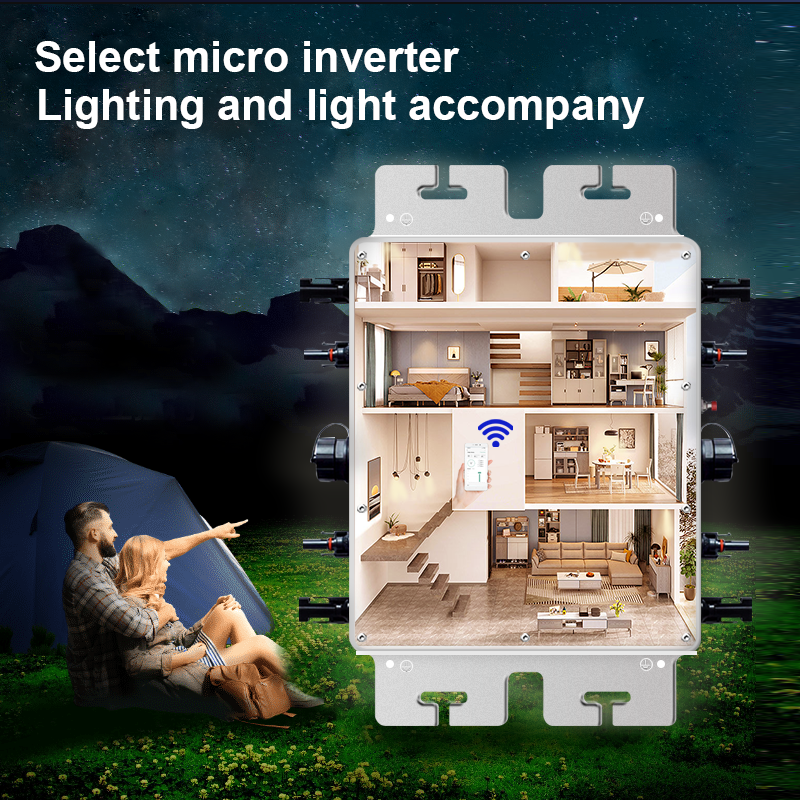
Solar photovoltaic microinverter is a device that converts DC from a single solar cell module to AC.
The DC power conversion of micro inverter is AC from a single solar module. Each solar cell module is equipped with inverter and converter function. Each module can convert current independently, so it is called "micro inverter".
Microinverters can achieve maximum power point tracking (MPPT) at the component level, which has advantages over centralized inverters. In this way, the output power of each module can be optimized to maximize the overall output power.
In addition, combined with the communication function, it can also be used to monitor the status of each module and detect the failure of the module.
According to whether there is energy storage battery, it can be divided into grid-connected micro-inverse and off-grid micro-inverse. According to the output voltage, it can be divided into single-phase micro-inverse and three-phase micro-inverse.
Microinverter technology proposes that the inverter is directly integrated with a single photovoltaic module, and each photovoltaic module is separately equipped with an inverter module with AC-DC conversion function and maximum power point tracking function, so that the electric energy emitted by the photovoltaic module is directly converted into AC electric energy for use by AC load or transmitted to the power grid.
When one panel doesn't work well, only that panel is affected. All the other photovoltaic panels will operate at their best, making the system more efficient overall and generating more power.
The DC power conversion of micro inverter is AC from a single solar module. Each solar cell module is equipped with inverter and converter function. Each module can convert current independently, so it is called "micro inverter".
Microinverters can achieve maximum power point tracking (MPPT) at the component level, which has advantages over centralized inverters. In this way, the output power of each module can be optimized to maximize the overall output power.
In addition, combined with the communication function, it can also be used to monitor the status of each module and detect the failure of the module.
According to whether there is energy storage battery, it can be divided into grid-connected micro-inverse and off-grid micro-inverse. According to the output voltage, it can be divided into single-phase micro-inverse and three-phase micro-inverse.
Microinverter technology proposes that the inverter is directly integrated with a single photovoltaic module, and each photovoltaic module is separately equipped with an inverter module with AC-DC conversion function and maximum power point tracking function, so that the electric energy emitted by the photovoltaic module is directly converted into AC electric energy for use by AC load or transmitted to the power grid.
When one panel doesn't work well, only that panel is affected. All the other photovoltaic panels will operate at their best, making the system more efficient overall and generating more power.
As the world continues to prioritize clean energy sources, solar power has emerged as a popular and sustainable option. And with the development of solar micro-inverter technology, solar power systems have become more efficient and reliable than ever.
Solar micro-inverters are small devices that are connected to individual solar panels in a solar power system. These inverters convert the DC (direct current) output from the solar panel to AC (alternating current) power, which is then fed back into the grid or used directly by the homeowner. This method of converting power has several benefits, including improved energy production, decreased energy loss, and increased system reliability.
The use of solar micro-inverters is on the rise due to their ability to improve the performance of solar power systems. By bypassing the need for a central inverter to convert DC to AC, micro-inverters allow each solar panel to operate independently, increasing overall energy production by up to 25%.
In addition to boosting energy production, micro-inverters also provide greater system reliability. With traditional central inverters, if one panel in the solar array fails, the entire system can be compromised. But with micro-inverters, each panel operates independently, meaning the failure of one panel does not affect the others.
Furthermore, micro-inverters allow for easier monitoring and maintenance of solar power systems. By providing data on the output of each panel, homeowners and solar companies can easily identify and address any issues that arise.
With these benefits, it's clear that the future of solar power lies in the continued development and implementation of micro-inverter technology. As we move towards a cleaner, more sustainable energy future, solar micro-inverters will play a crucial role in achieving our goals.
Solar micro-inverters are small devices that are connected to individual solar panels in a solar power system. These inverters convert the DC (direct current) output from the solar panel to AC (alternating current) power, which is then fed back into the grid or used directly by the homeowner. This method of converting power has several benefits, including improved energy production, decreased energy loss, and increased system reliability.
The use of solar micro-inverters is on the rise due to their ability to improve the performance of solar power systems. By bypassing the need for a central inverter to convert DC to AC, micro-inverters allow each solar panel to operate independently, increasing overall energy production by up to 25%.
In addition to boosting energy production, micro-inverters also provide greater system reliability. With traditional central inverters, if one panel in the solar array fails, the entire system can be compromised. But with micro-inverters, each panel operates independently, meaning the failure of one panel does not affect the others.
Furthermore, micro-inverters allow for easier monitoring and maintenance of solar power systems. By providing data on the output of each panel, homeowners and solar companies can easily identify and address any issues that arise.
With these benefits, it's clear that the future of solar power lies in the continued development and implementation of micro-inverter technology. As we move towards a cleaner, more sustainable energy future, solar micro-inverters will play a crucial role in achieving our goals.